How to Transition Into Public Health Career Without a Medical Background
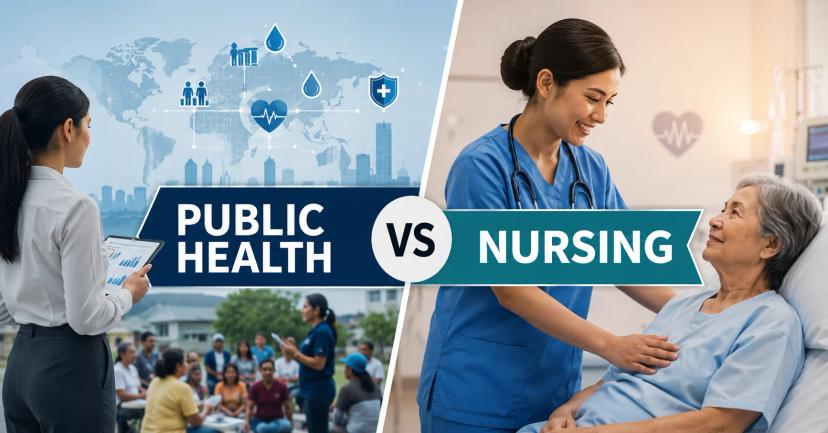
Many people often think that public health careers are only suited for people who are doctors, nurses, or medical students. However, this is not the case in reality, as the field is much broader. Public health is a much wider field. It is concerned with the improvement of the health of communities at large, the prevention of diseases, and the development of better health systems. Because of this, people from a wide range of backgrounds are needed.
If you have studied business, economics, psychology, social sciences, statistics, communication, or management, it can be said that you already have skills that can be applied to a career in public health. The most important thing is that you are interested in health issues and that you are prepared to acquire the necessary knowledge and experience.
Public Health Domain—Key Data Points
-
The global health workforce is expected to consist of 84 million health workers by 2030, reflecting vigorous sector expansion.
-
According to WHO, it is estimated that there will be a deficit of 10-11 million health workers by 2030, implying that there will still be a need for skilled personnel.
-
Healthcare and public health employment is projected to increase at a rate of employment faster than average over the next decade.
-
Jobs such as those of epidemiologists are expected to increase by 19-27%, which is much higher than most jobs.
Understanding Where You Fit in Public Health
Most of the work in public health is done outside of hospitals. It includes tasks such as planning health programs, analyzing trends of diseases, health education and awareness, and assisting organizations or governments in making better health decisions.
Some examples of the kind of work that is required to be undertaken in public health are:
-
communicators to design health campaigns
-
analysts to study health data and information
-
managers to run health programs
-
researchers to investigate and analyze health policies
-
Social workers engage with the community.
This diversity of work is why a medical degree is not always necessary.
Start With Your Existing Skills
Instead of rushing yourself into a new degree, it might be helpful to consider what you already have to offer. Many people are entering the public health domain from a professional background. They tend to underestimate the skills they already possess.
If you have experience in the corporate, education, NGO, or research sectors, you may already have:
-
writing or public speaking skills
-
experience managing reports or data
-
ability to coordinate a project
-
experience working as part of a team
-
budgeting or administrative knowledge
All the above skills are directly useful in public health roles like program coordinator, health educator, research assistant, or policy associate.
Choosing the Right Public Health Course
Education is usually the fastest route into the profession, especially when your existing degree is not relevant.
Undergraduate Options
-
Bachelor of Public Health (BPH)
-
BSc or BA in Public Health
-
Bachelor in Health Administration
-
Degrees in Environmental Health or Community Health
There are other relevant courses as well, and all these courses provide foundational knowledge in the principles of epidemiology, prevention, health systems, and research. Upon completion, students usually enter junior roles within NGOs, research, or government.
Postgraduate Options
For those who have graduated in other disciplines, pursuing a postgraduate degree is more applicable. The Master of Public Health (MPH) is the most widely recognized degree. It would take one to two years to complete and enables one to specialize in the following:
-
epidemiology
-
global health
-
health policy and management
-
biostatistics
-
environmental health
-
social and behavioral health
Other than the MPH degree, other relevant courses would be the MSc in Public Health degree, global health courses, a master's degree in health administration, a PG diploma, or health economics courses.
Experience Matters More Than You Think
While having a degree is a great way to open doors, it's often the practical experience that counts the most. It's essential to show that you have an understanding of how public health operates in the real world.
Here are a few ways you can begin to gain experience:
-
volunteering for health NGOs
-
participating in awareness campaigns or community initiatives
-
helping out with research surveys or university projects
-
doing an internship with development organizations
-
Helping out local clinics with outreach programs
It doesn't matter if you only participate in these activities for a short period of time—it will showcase that you are proactive and give you something to talk about in job interviews.
Popular Non-Medical Public Health Careers
There are many opportunities in public health that do not necessarily need clinical training.
A health educator is involved in campaigns, events, and school- or hospital-based preventive programs. The average salary is approximately $61,000 globally, depending on experience.
A community health coordinator or worker connects communities with services and programs. The average yearly compensation is around $52,000.
Those who are more interested in the analytical or research side of public health become analysts or research assistants. They analyze data and write reports. The average salary is approximately $70,000, depending on experience and specialization.
An environmental health officer is concerned with sanitation, pollution, and safety. In this role, the average annual salary is around $78,000.
With experience, many people transition into public health program managers, who manage projects, teams, and budgets. These positions often pay an average of $78,000 or more.
Read also: Career in Healthcare Administration: Strong Job Growth Forecast
Where Public Health Professionals Work
One of the reasons why people are drawn to this profession is because of the diverse employment opportunities available. Government agencies hire professionals for disease control programs, national health missions, and planning. NGOs and global agencies implement community programs for nutrition, maternal health, sanitation, and global health programs.
The private sector is also a potential employment area, which is offering tremendous opportunities. Corporations require professionals for workplace health programs, health analytics, consulting, and insurance projects. Educational institutions also take public health candidates for surveys, research, and teaching assignments.
This diversity makes the field stable and flexible for long-term career growth.
Skills That Strengthen Your Public Health Career
You do not have to know all things at once, but some skills will help you learn faster in this field. You should try to develop skills in the following areas:
-
basic data interpretation and understanding of statistics
-
clear report writing and presentation skills
-
Communication for community engagement
-
research and survey design knowledge
-
project planning and organizational skills
These skills can be gained by taking courses, internships, or work experience in established government organizations or credible private firms.
A Simple Transition Plan
If you want a clear starting point, keep it practical.
Start by learning the basics through the online courses or reading about public health systems. Once you are confident, apply for an MPH or postgraduate diploma while attempting to volunteer or intern in similar ways. After your qualification and experience, apply for entry-level jobs like a coordinator, analyst, or educator.
After that, specialization and advancement will come with experience.
Conclusion
Switching to a career in public health without a medical background is more prevalent than ever. There is a need for individuals in this field who have knowledge of communities, systems, communication, and data, aside from medical professionals and clinicians.
If you are interested in the public health profession, you can begin by looking into a course in public health, searching for volunteer or internship opportunities, and working on developing skills in a gradual manner. By doing so, you can enter this career smoothly and build a career that brings a real impact to people's lives.